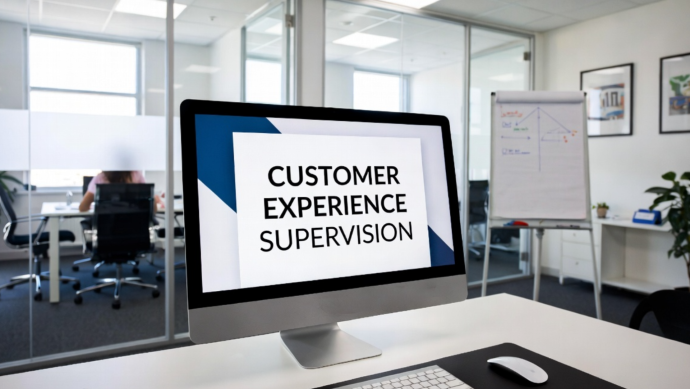
CISTREC_ADI_M702-001-2 2019_CUSTOMER EXPERIENCE OPERATION SUPPORT SERVICES_02/2026
249 days / 1920 hours
Traditional marketing in the mass-marketing era of the twentieth century relies heavily on having the best brand to gain competitive advantage. In contrast, the interactive era of the 21st century focuses more on how enterprises strategize to gain sustainable competitive advantage from the information they gather about customers. This creates a two-way brand relationship—known as a branded relationship—that thrives on customer information and interaction. Through this, the value of the company increases by implementing specific customer strategies, including acquiring profitable customers, retaining profitable customers, and growing profitable customers through upselling additional products in a solution, cross-selling other products, gaining referrals and word-of-mouth benefits, and reducing service and operational costs.
The advancement of new communication technologies allows the industry to reach customers at the nearest distance and fastest time. This achievement, hardly possible in the previous century, has now become a reality. The sophistication of these technologies has opened a new frontier of marketing that challenges existing business methods.
Consumers are becoming more informed as communication technologies provide greater access to product specifications, services, competitor information, and platforms to share their views and experiences. This trend introduces new pressures that reshape the marketing environment. Therefore, focusing on the customer is critical for today’s business strategies to stay relevant and competitive. This is where the importance of the Customer Relations Management function arises and becomes essential for business survival. (Don Peppers & Martha Rogers 2011, P5)
Relationships in this context need to be defined beyond the basic dictionary meaning. The key issue is how the definition of the relationship contributes to a company’s success in the customer-oriented dimension of competition.
Forward-thinking organizations understand the importance of knowing their customers and recognizing their lifetime value in navigating today’s challenges. Products and services alone are no longer enough to differentiate organizations. Modern consumers make purchase decisions based more on their perceptions of their relationships with specific organizations.
Beginning in the early millennium, marketers' and salespeople’s attention shifted significantly towards the customer experience approach. This trend evolves in parallel with the development of communication technologies that heavily influence customers. Customer experience has become a dynamic and prominent approach in the industry. Consequently, the marketing environment has shifted from a product- and service-centric model to a customer-centric one. Today, the term customer experience is widely embraced within the business community.
The emergence of new technologies that collect, reveal, and manipulate information by tracking customer movements and behaviour has been wisely utilized in the industry. Marketers are no longer focusing solely on providing product information to drive business results. Instead, they continuously collect and analyse information through interactions and business environments with their customers to understand response patterns and meet demand effectively.
Rapid development in information technology has empowered customers with better access to product and service knowledge. By sharing experiences, customers generate third-party information that makes them more informed about creators, marketers, and sellers.
Business owners and marketing groups feel the pressure of competition. To stay ahead, they seek tools and instruments to support their business strategies. This leads to research activities that give rise to business analytics and various information-analysis systems that assist decision-makers in managing customer sectors.
Customer experience support services teams serve as the frontline strength in supporting the division’s objectives. They interact with potential, existing, and future clients to implement the company’s customer experience policies and strategies.
BASIC WORKING COMMUNICATION
Z-009-1:2015-CA01
25h
PERSONAL BEHAVIOUR SKILL
Z-009-1:2015-CA02
38h
WORKPLACE ETHICS AWARENESS
Z-009-1:2015-CA03
10h
HEALTH, SAFETY AND ENVIRONMENTAL AWARENESS
Z-009-1:2015-CA04
27h
BASIC WORKING COMMUNICATION
Z-009-2:2015-CA01
25h
PERSONAL BEHAVIOUR SKILL
Z-009-2:2015-CA02
28h
WORK PLACE ETHICS AWARENESS
Z-009-2:2015-CA03
22h
HEALTH, SAFETY AND ENVIRONMENTAL AWARENESS
Z-009-2:2015-CA04
25h
EFFECTIVE COMMUNICATION
Z-009-3:2015-CA01
25h
INFORMATION TECHNOLOGY AWARENESS
Z-009-3:2015-CA02
15h
LEADERSHIP SKILL
Z-009-3:2015-CA03
78h
WORKPLACE ETHICS
Z-009-3:2015-CA04
22h
ADMINISTRATIVE SKILL
Z-009-3:2015-CA05
30h
HEALTH, SAFETY AND ENVIRONMENTAL IMPLEMENTATION CONSCIOUSNESS
Z-009-3:2015-CA06
30h
(ADI) CUSTOMER EXPERIENCE DATA PROCESSING
M702-001-2:2019-C01
230h
(ADI) CUSTOMER NEEDS & REQUIREMENTS IDENTIFICATION
M702-001-2:2019-C02
220h
(ADI) CUSTOMER FEEDBACK HANDLING
M702-001-2:2019-C03
220h
(ADI) CUSTOMER EXPERIENCE ADMINISTRATION (CEA) SUPPORT FUNCTIONS
M702-001-2:2019-C04
200h
(ADI) FRONTLINE SERVICE ACTIVITIES
M702-001-2:2019-C05
250h
INSTITUTE OF SKILL
Training Centre
1,660
Students4
Courses61
ProgramsOther Courses